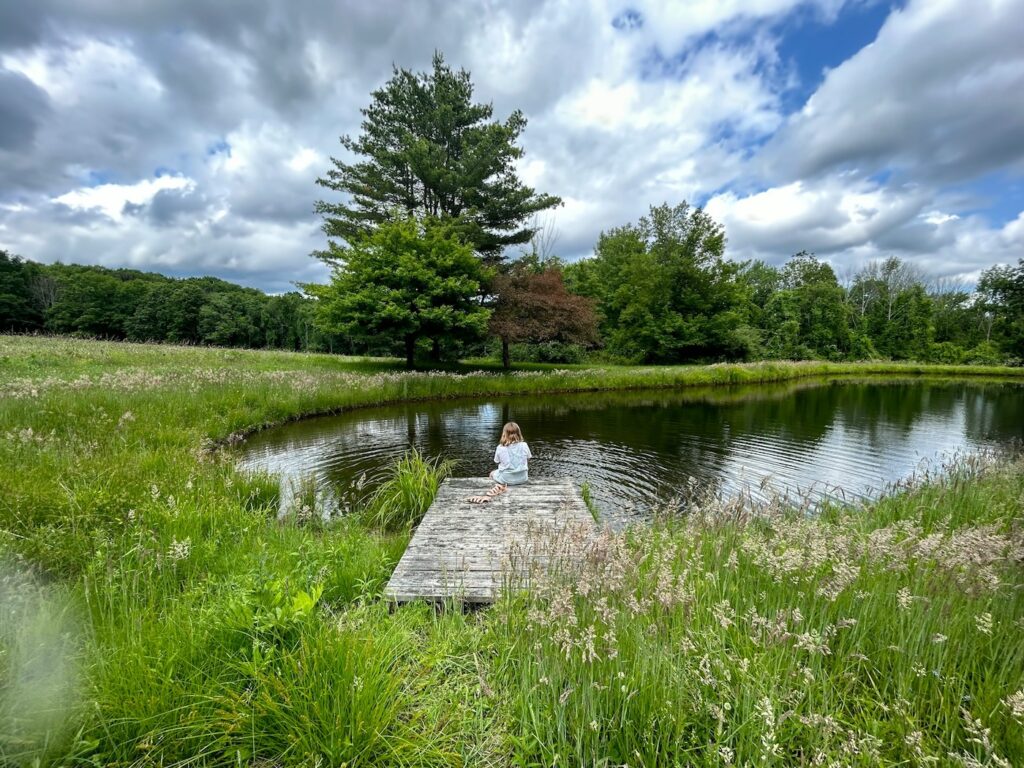
Rewilding is about restoring natural processes and encouraging ecosystems to recover with minimal human intervention. Ponds can play a role in this movement. We’ve seen how reintroducing water features can transform degraded land into thriving, self-sustaining habitats – so get in touch if your land needs a helping hand!
Support local flora and fauna
Ponds act as ecological anchors in rewilding projects. Even a small, well-placed pond attracts a wide range of wildlife, from amphibians and insects to birds and mammals. As part of broader land regeneration efforts, ponds help restore natural hydrology, improve soil moisture, and support native vegetation.
What is needed?
A rewilding pond doesn’t need to be deep or elaborate. In fact, shallow, gently sloped margins with native aquatic plants provide the best habitat diversity. Over time, natural colonisation takes place, with species like newts, dragonflies, and wetland birds returning on their own, often within the first year.
Climate resilience
Beyond biodiversity, water features help with climate resilience. Ponds reduce surface runoff, improve carbon storage in wetland soils, and provide drought refuge during hotter, drier summers. They also create a more attractive, natural landscape that enhances the overall aesthetic and ecological value of estates and rural landholdings.