Algae and invasive aquatic weeds are among the most common challenges faced by pond owners. Left unmanaged, they can choke waterbodies, deplete oxygen, and disrupt the balance of aquatic life. We tend to take a natural, preventative approach to managing these issues.
Nutrient Management
The key to natural control is understanding the root causes. Algae blooms are often fuelled by excess nutrients, particularly nitrogen and phosphorus, from fertiliser runoff or decaying organic matter. Invasive weeds like duckweed thrive under similar conditions. That’s why nutrient management is a top priority.
Edging Plants
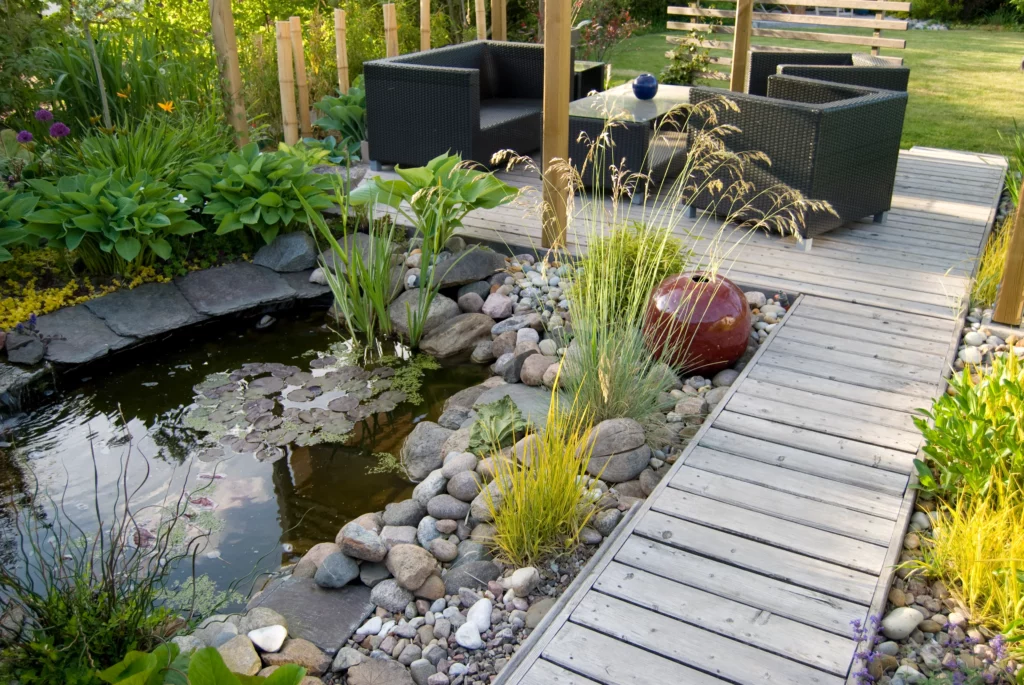
Planting native marginal vegetation such as reeds, rushes, and sedges along pond edges helps absorb nutrients before they enter open water. These plants also shade the margins, reducing light penetration and slowing weed growth.
Aeration
Aeration systems play a major role in reducing algae naturally. By increasing oxygen levels and promoting water circulation, aeration discourages the conditions algae need to thrive, while supporting beneficial bacteria that break down organic waste.
Adding barley straw in small mesh bundles can also be an effective, low-impact method. As it decomposes, it releases compounds that inhibit algae growth, particularly in smaller or wildlife-focused ponds.
Routine maintenance, such as removing excess leaf litter and trimming back invasive growth, completes a strong natural management plan.