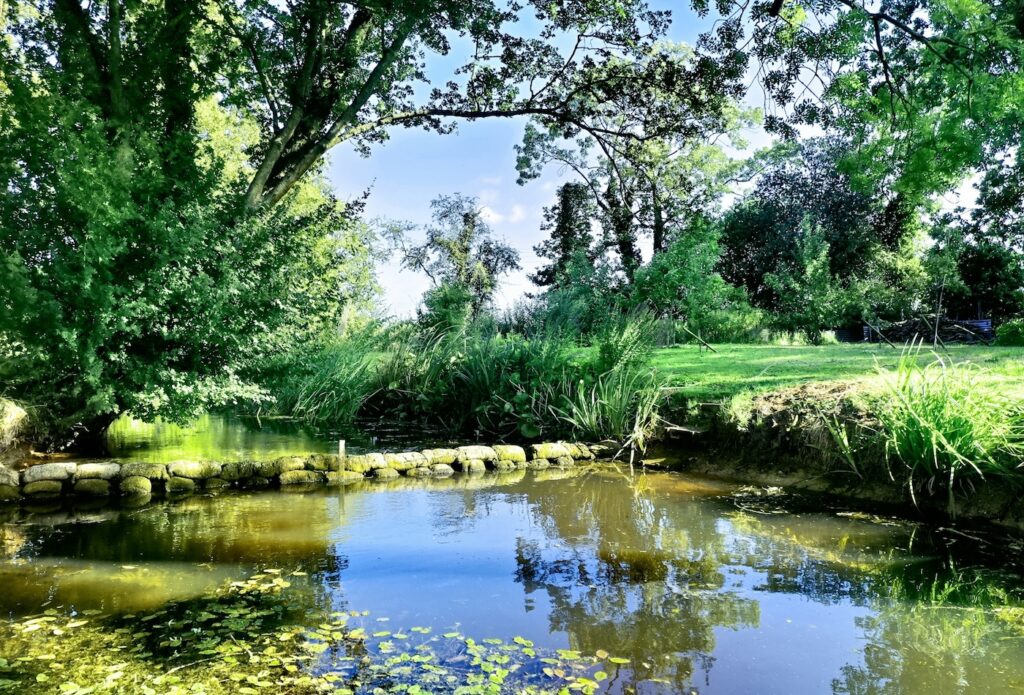
A healthy pond ecosystem supports clear water, balanced wildlife, and thriving fish, without the need for constant intervention. Whether your pond is ornamental or a working fishery, maintaining ecological balance is essential for long-term success.
Water Quality
The foundation of a good ecosystem is water quality. Regular monitoring of pH, oxygen levels, and nutrient content helps prevent issues like algae blooms and fish stress. Installing an aeration system or fountain keeps oxygen circulating, especially in warmer months or deeper ponds.
Aquatic Plants
Native aquatic plants play a key role. Species like water lilies, reeds, and submerged oxygenators help absorb excess nutrients, stabilise sediment, and provide habitat for invertebrates and young fish. Avoid overplanting, though, as too much vegetation can reduce oxygen levels overnight.
Fish and Maintenance
Balanced fish stocking is another important factor. Overstocking leads to poor water quality and competition for food, while understocking can allow pests or invasive species to dominate. Choose fish species that suit your pond’s depth, size, and water temperature.
Routine maintenance is essential. Remove fallen leaves and excess organic matter, especially in autumn, to prevent silt build-up and nutrient overload. Manage runoff from nearby land to avoid introducing fertilisers, pesticides, or waste.