The edge of a pond is where land meets water, and how you plant it makes all the difference. A thoughtful, layered planting scheme creates structure, supports wildlife, and softens hard edges so the pond feels like a natural part of the garden rather than an add-on.
Start with Structure
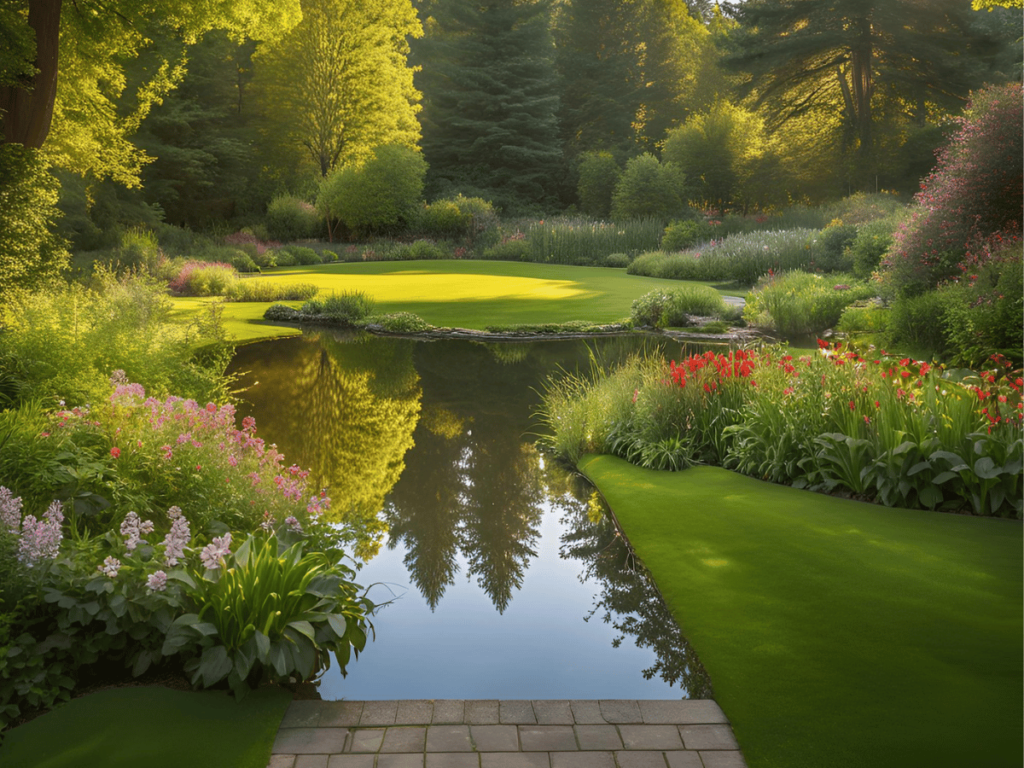
Begin by planning your layers from back to front. Taller plants such as irises, rushes or ornamental grasses go at the rear to provide height and a backdrop. These anchor the view, frame the water, and can even act as windbreaks. Mid-height plants like loosestrife, marsh marigold or hostas then fill in the middle zone, adding seasonal colour and texture.
Bring it to the Water’s Edge
Closer to the pond, use lower-growing species and marginal plants that can tolerate damp soil. Creeping groundcovers, sedges, and water forget-me-not help blur the line between land and water. This creates a more natural appearance and, practically, helps stabilise the soil against erosion.
Think in Layers, Not Lines
Rather than planting in straight rows, stagger and overlap plants so they form a tapestry of heights, shapes, and colours. Repeating a few key species ties the design together, while leaving some open access points maintains space for maintenance or viewing.
A layered approach produces a richer, more dynamic pond edge that’s easier to manage and more resilient over time – combining beauty, structure, and ecological value in one thoughtful design.